Bridge of Unity and Innovation
Why Bosnia?
Bosnia and Herzegovina, located in Southeast Europe, is bordered by Croatia, Serbia, and Montenegro, with a narrow coastline along the Adriatic Sea. The capital, Sarajevo, serves as the political, economic, and cultural centre. The nation is renowned for its multicultural heritage, exemplified by the annual Sarajevo Film Festival, which attracts international attention. Notable landmarks include the reconstructed 16th-century Stari Most (Old Bridge) in Mostar, a UNESCO World Heritage site symbolising reconciliation. The country’s strategic position offers access to both Central and Southeastern European markets, enhancing its appeal for global operations. A unique selling point is its multilingual workforce, proficient in various languages, which is advantageous for international business engagements. The official currency is the Convertible Mark (BAM).
Key advantages of BPOs in Bosnia include:

Population and language
Bosnia and Herzegovina has a population of approximately 3.14 million, with a density of 62 people per square kilometre. Around 56.3% of residents live in urban areas. The country is home to three primary ethnic groups: Bosniaks, Serbs, and Croats. The official languages are Bosnian, Serbian, and Croatian, which are mutually intelligible. English is widely taught in higher education and used in business. The average age is 45.7 years, reflecting an ageing population. On average, women have 1.5 children, which is below the level needed to maintain population size. The population is declining, with a negative growth rate and ongoing net migration losses. Religiously, the population is diverse, with Islam, Serbian Orthodoxy, and Roman Catholicism being the most widely practised faiths.
Education and workforce
Bosnia and Herzegovina’s workforce is supported by key universities, including the University of Sarajevo, the University of Banja Luka, and the University of Tuzla. Workforce participation varies, with 55% of men and 35% of women employed. The overall employment rate for those aged 15-64 is 44.7%. Unemployment remains high, driving demand for skilled foreign workers, particularly in construction. Wage growth has averaged 5.46%, with notable fluctuations. The labour market faces challenges from an ageing population and emigration, which reduce workforce availability. Government efforts focus on strengthening domestic production and reducing reliance on imports. Digital skills development and professional training initiatives aim to support industries requiring multilingual talent and advanced problem-solving abilities, enhancing the country’s attractiveness for global service operations.
Transport and infrastructure
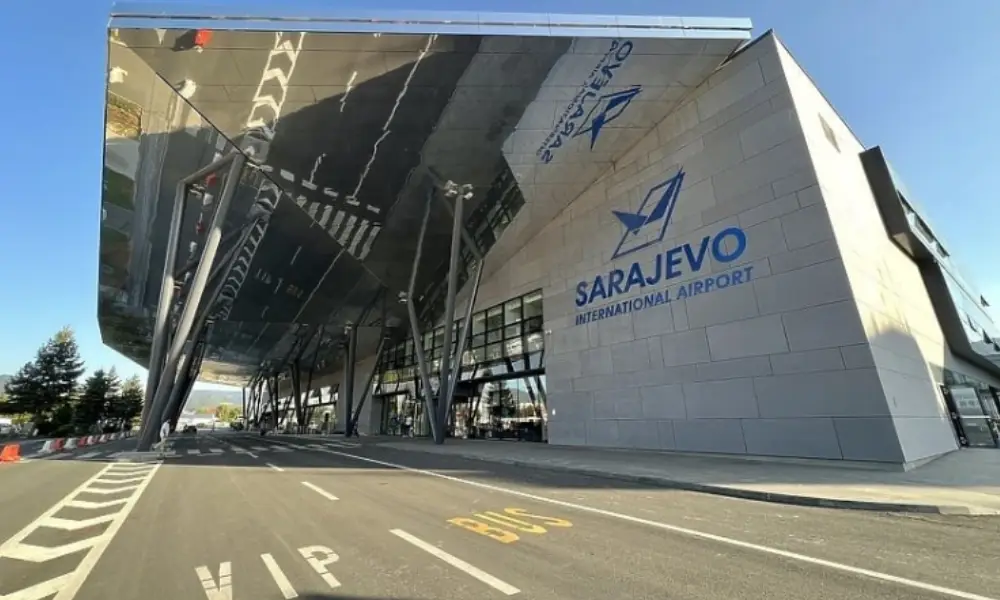
Sarajevo International Airport (IATA: SJJ, ICAO: LQSA) is the main gateway for business travel in Bosnia and Herzegovina, with Banja Luka (IATA: BNX, ICAO: LQBK), Mostar (IATA: OMO, ICAO: LQMO), and Tuzla (IATA: TZL, ICAO: LQTZ) also serving key routes. Corridor Vc, a major transport project, is improving connectivity between business hubs. The railway network provides a safe and reliable option for internal travel, linking major cities and industrial areas. Recent investments focus on strengthening transport resilience due to flood-related infrastructure damage. In urban centres, taxis and ride-sharing services offer accessible transport for business travellers. Public transport improvements support sustainable mobility. Continued development of roads and railways is enhancing accessibility, supporting logistics and commercial growth while strengthening connections with European trade and business networks.

Telecommunications and connectivity
Telemach leads Bosnia and Herzegovina’s fixed network performance, excelling in download and upload speeds. m:tel was awarded ‘Best Mobile Network,’ strengthening competition in mobile services. The telecommunications sector has grown at 3.5% annually, reaching a market size of USD 1 billion. There are 3.87 million mobile cellular subscriptions and 908,000 fixed broadband subscriptions. Internet penetration is projected to reach 87.72%, supporting digital connectivity. Fibre-optic infrastructure is expanding to enable remote work, though specific penetration data is limited. The country connects globally through terrestrial links with neighbouring nations. Data centres in urban areas support digital operations. Plans for 5G licensing are in progress to enhance connectivity and drive technological innovation. Government initiatives continue to improve telecommunications infrastructure to meet increasing business demands.
Government support and growth
The Science and Technology Park of the Republic of Srpska in Banja Luka is a key initiative in Bosnia and Herzegovina, designed to support innovation, technology development, and startup growth. The government is implementing a digital certificate system to enhance e-governance and improve service accessibility. The E-Governance Activity strengthens transparency and citizen engagement. The American Chamber of Commerce connects local businesses with global tech leaders. The European Bank for Reconstruction and Development supports electronic certification initiatives. The World Bank and United Nations Development Programme are assisting in public sector digitalisation. The government prioritises economic growth through digital transformation and investment in technology. Efforts to align with EU standards are ongoing, while increased support for startups and IT-driven enterprises strengthens the country’s digital economy.
BPO services
The BPO market in Bosnia and Herzegovina is projected to grow at 4.92% annually, reaching USD 55.03 million by 2029. The IT outsourcing sector is expanding at 8.84% annually, with an expected market size of USD 95.61 million. The call centre industry is valued at USD 127 million, with 172 active businesses. Key BPO sectors include customer service, technical support, IT services, and finance and accounting outsourcing. The highly skilled workforce, particularly in engineering and technology, enhances outsourcing capabilities. Proximity to Western Europe and cultural alignment strengthen the country’s position. Government initiatives are supporting digitalisation to drive industry growth. Trends shaping the sector include AI-driven automation, multilingual customer support, and cloud-based service solutions, increasing efficiency and competitiveness in outsourced operations.

Top Outsourcing services
Exceptional service solutions
South Africa excels in providing diverse and efficient outsourcing services, including customer support, technical assistance, financial process management, and specialised industry support.
ServiceS frequently outsourced to
Bosnia
- Billing Support
- Booking Support
- Customer Service
- DevOps Practices
- Digital & Technology Services
- Digital Transformation
- ERP Solutions
- Financial Accounting
- Google Ad Buyers
- Google Ad Management
- Help Desk
- I.T. Audit & Consulting
- I.T. Staffing Services
- Infrastructure Maintenance
- L2 & L3 Suport
- Multilingual Support
- Omni-channel Services
- Research and Development
- Robotic Process Automation (RPA)
- SEO Specialists
- Software Development
ServiceS frequently outsourced to
Bosnia
- Billing Support
- Booking Support
- Customer Service
- DevOps Practices
- Digital & Technology Services
- Digital Transformation
- ERP Solutions
- Financial Accounting
- Google Ad Buyers
- Google Ad Management
- Help Desk
- I.T. Audit & Consulting
- I.T. Staffing Services
- Infrastructure Maintenance
- L2 & L3 Suport
- Multilingual Support
- Omni-channel Services
- Research and Development
- Retail & e-commerce
- Social Media SupportSEO Specialists
- Software Development