Global BPO Destination
Why global companies choose Manila BPOs
As one of the premier outsourcing destinations in the world, Manila continues to attract international attention for its highly skilled workforce, resilient infrastructure and cost-effective services. For businesses seeking to scale efficiently, the Manila BPO sector offers a compelling mix of talent, technology and government support, making it a cornerstone of the global business process outsourcing landscape.
Why Manila?
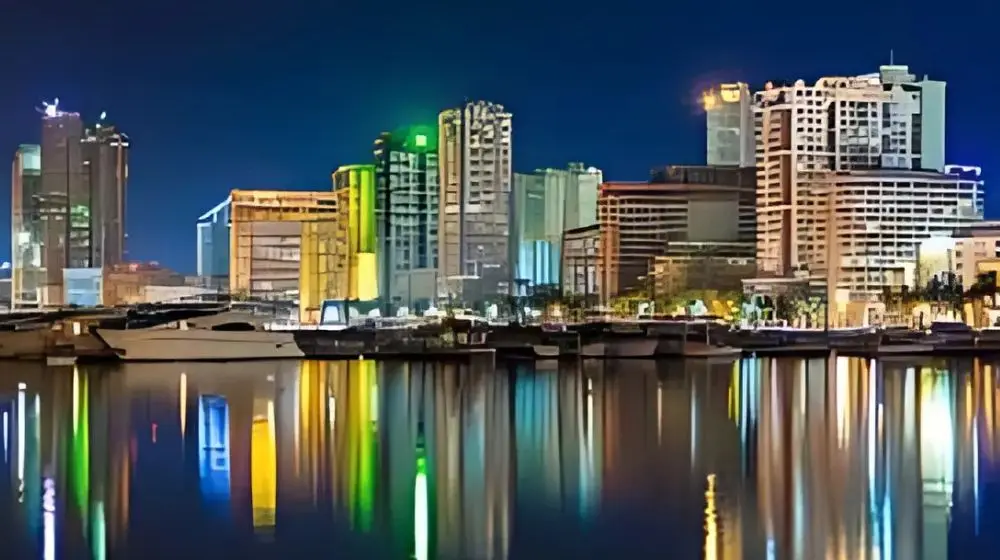
Manila, officially the City of Manila, is the capital and second-most populous city of the Philippines. Located on the eastern shore of Manila Bay on the island of Luzon, it is a densely populated bayside city that combines Spanish colonial architecture with modern skyscrapers. Metro Manila, the officially defined metropolitan area, includes the much larger Quezon City and the Makati Central Business District. It is the most populous region in the country, one of the most populous urban areas in the world, and one of the wealthiest regions in Southeast Asia.
Key advantages of BPOs in Manila include:
Population and language
The 2020 Census of Population and Housing (2020 CPH) reported that the population of the City of Manila had reached 1,846,513. Metro Manila, formerly the National Capital Region of the Philippines, is the seat of government and the most populous region of the Philippines. Metro Manila, an area of 636 km², has an estimated population of 14.5 million people and consists of sixteen highly urbanised cities: Manila—the capital—Caloocan, Las Piñas, Makati, Malabon, Mandaluyong, Marikina, Muntinlupa, Navotas, Parañaque, Pasay, Pasig, Quezon City, San Juan, Taguig, and Valenzuela—along with one independent municipality, Pateros. Filipino, the standardised form of Tagalog, is the national language and is used in formal education throughout the country. Filipino and English are both official languages, and English is commonly used by the government.
Education and workforce
Education in the Philippines is compulsory until senior high school. The government subsidises free education for most children enrolled in public schools in the Philippines. The official languages of the Philippines are Filipino and English, which serve as the primary modes of instruction in schools. Manila is the Philippines’ educational centre, with a high concentration of universities found in the unofficial ‘University Belt’ district, all within walking distance of each other. This includes the oldest university in both the country and Asia—the University of Santo Tomas, which was founded in 1611. With 45 universities offering 950 study programs, Manila has the highest number of universities in the Philippines. Based on the preliminary estimates for 2023, the unemployment rate in Metro Manila was 5.9 percent.
Transport and infrastructure
Ninoy Aquino International Airport (NAIA) (IATA: MNL, ICAO: RPLL), also known as Manila International Airport (MIA), is the main international airport serving Metro Manila. Located between the cities of Pasay and Parañaque, about 7 kilometres (4.3 miles) south of Manila and southwest of Makati, it handles 45 million passengers annually. It is the main gateway to the Philippines. A taxi from the airport to the city centre in Makati takes 20 minutes and costs $5 USD. The Manila Metro Rail Transit System (MRTS), commonly known as the MRT, is a rapid transit system that primarily serves Metro Manila, Philippines. Along with the Manila Light Rail Transit System and the Metro Commuter Line of the Philippine National Railways, the system makes up Metro Manila’s rail infrastructure.

Telecommunications and connectivity
Recent years have seen Manila BPOs offer greater amounts of work-from-home agents, which has led to increased investments in residential telco infrastructure. In December 2024, the Philippine Long Distance Telephone Company (PLDT) and its wireless subsidiary Smart Communications announced they were enhancing their mobile network in Metro Manila. Smart has rolled out additional 4G/LTE and 5G sites. In Q2 2024, GSAM reported that Manila had the fastest fixed broadband performance in the Philippines, with reported download and upload speeds surpassing 90 Mbps. Additionally, businesses in Manila benefit from strong infrastructure, with a connectivity ecosystem made up of 27 colocation data centres, 68 cloud service providers, and 27 networking fabrics. With 12 service providers, Globe Telecom operates the #1 data centre in Manila, which is known as MK2.
Government support and growth
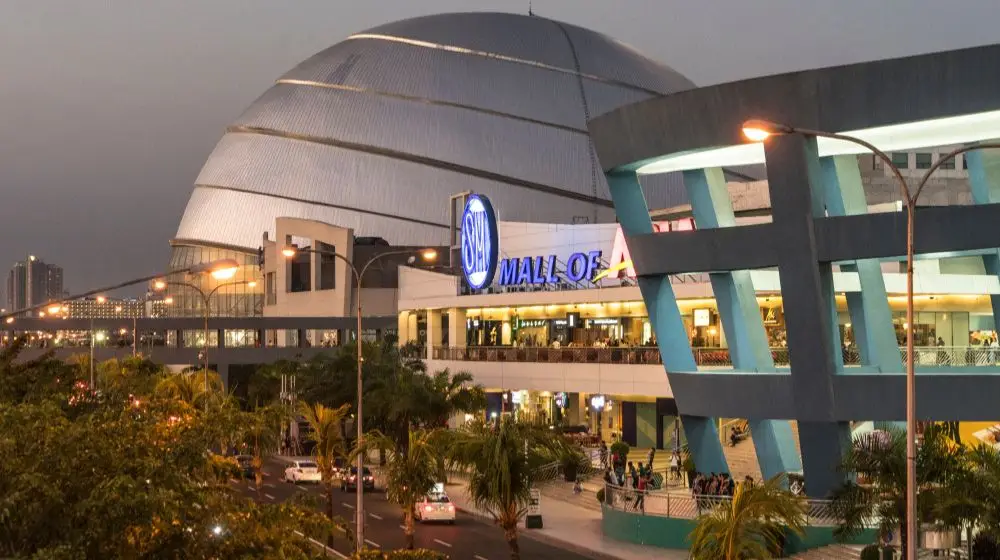
In 1995, the government enacted Special Economic Zone Act legislation, which positioned the Philippines as an attractive destination by providing tax incentives and other benefits for BPOs operating within special economic zones. The Philippine Economic Zone Authority (PEZA) promotes these incentives to encourage investment. Visitors to Manila will know it is a busy and vibrant city. Manila Bay is a popular destination for walks and for viewing the sunset, including important sites such as the Philippine Senate and the Mall of Asia. The $1.5 billion USD under-construction Manila Waterfront City aims to become the financial hub of Manila. Further improvements to the infrastructure in Manila include the construction of a new airport terminal building to accommodate an additional 35 million passengers annually and linkage to the Metro Manila Subway.
BPO services
Manila is a global hub for BPO operations. Its well-established infrastructure and large pool of educated and talented young professionals have contributed to its success in attracting BPO investments. The buildings and facilities in Manila are enterprise-grade. Businesses can operate smoothly and efficiently thanks to the office spaces’ state-of-the-art amenities. In 2024, CBRE reported that it expects that 65% of offices leased in Manila will be to BPOs. CBRE stated that current availability of office space in Metro Manila stands at 1.72 million square meters, with the Bay area and Alabang having significant portions of this space. CBRE added that the property sector is on a post-COVID pandemic recovery path, with expectations of a further decline in the vacancy rate to 5.4% by 2027.
Manila BPO growth is being driven by technology, government incentives and an education system that prioritises English proficiency. Businesses seeking scalable, cost-effective solutions will find a strategic advantage in the evolving Manila call and contact center ecosystem.

Top Outsourcing services
Exceptional service solutions
South Africa excels in providing diverse and efficient outsourcing services, including customer support, technical assistance, financial process management, and specialised industry support.
ServiceS frequently outsourced to
manila
- Appointment Setting
- Content Moderation
- Customer Services
- Gaming Support
- Guest Services
- Healthcare Support
- Help Desk
- Inbound Sales
- Insurance Policy Checking
- Lead Qualification
- Medical Billing & Coding
- Medical Transcription
- Omni Channel Support
- Pre-Insurance Verification
- Quality Assurance
- Recruitment Process Outsourcing
- Remote Staffing
- Social Media Support
- Telehealth Support
- Travel & Leisure Support
- Virtual Staff
ServiceS frequently outsourced to
Manila
- Appointment Setting
- Content Moderation
- Customer Services
- Gaming Support
- Guest Services
- Healthcare Support
- Help Desk
- Inbound Sales
- Insurance Policy Checking
- Lead Qualification
- Medical Billing & Coding
- Medical Transcription
- Omni Channel Support
- Pre-Insurance Verification
- Quality Assurance
- Recruitment Process Outsourcing
- Remote Staffing
- Social Media Support
- Telehealth Support
- Travel & Leisure Support
- Virtual Staff